

Co-Founder & CEO
Ziad Sakr
Ziad Sakr is the Co-Founder and CEO of Core Sports AI, where he brings together two areas that have shaped his life and career: elite competitive squash and artificial intelligence.
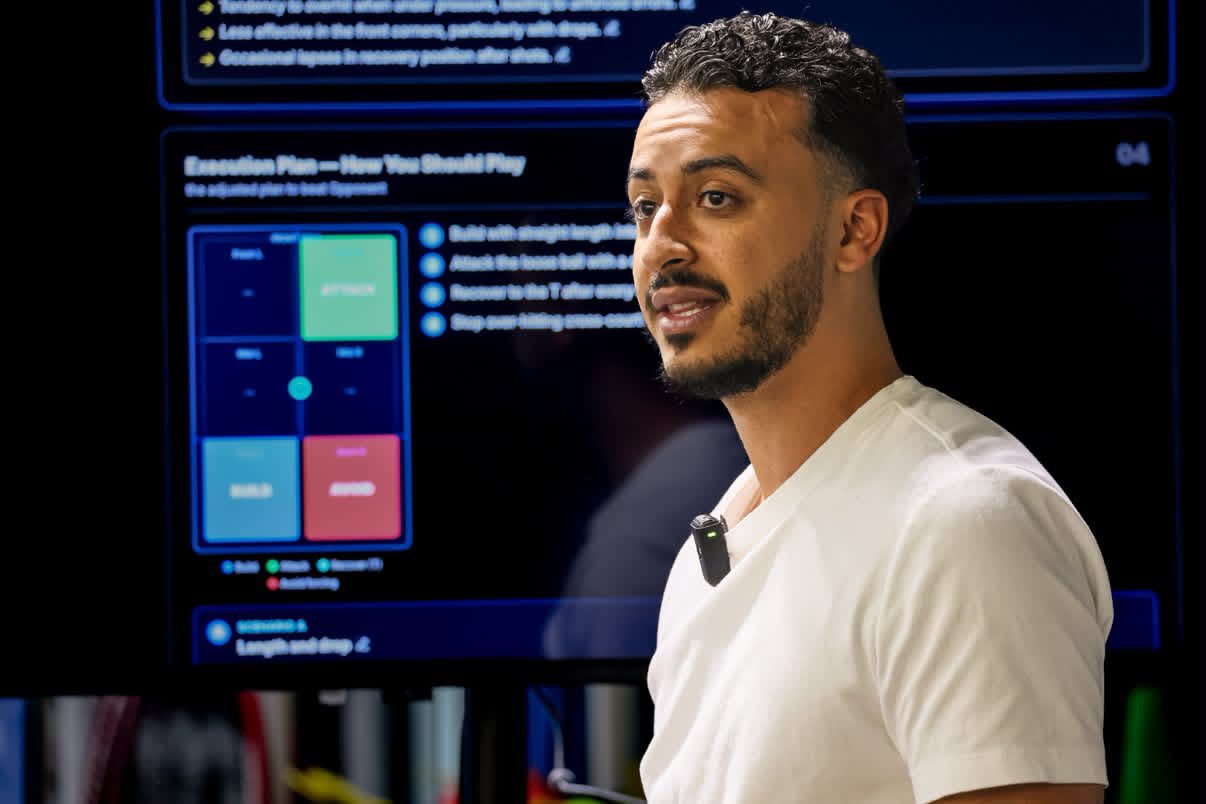
About Ziad Sakr
Before building technology for athletes, Ziad spent years competing as one. Growing up in Egypt's highly competitive squash system, he became a multiple-time national champion, competed among the world's leading junior players, represented Egypt internationally, played collegiate squash in the United States, and later competed professionally.
Alongside his athletic career, Ziad built an academic and professional path in computer science and artificial intelligence. He studied Computer Science at Trinity College, pursued a master's degree at Boston University, conducted research at the Massachusetts Institute of Technology (MIT), and went on to build production software and AI systems professionally.
Ziad co-founded Core Sports AI with Abdelrahman Nassar and Taha Dinana, combining complementary strengths across technology and marketing. Ziad led the end-to-end development of Core Sports AI's technology, from the initial technical architecture and AI strategy through computer vision, player and ball tracking, performance intelligence, Digital Twin technology, scouting and simulation systems, backend infrastructure, and production deployment. Abdelrahman led Core's marketing and go-to-market efforts, including brand positioning, partnerships, and growth.
As Co-Founder and CEO, Ziad continues to lead Core's product and technology direction as the company works toward building a new intelligence layer for athletes, coaches, and sports organizations.
Squash Background
Squash has been a major part of Ziad's life since childhood. Growing up in Egypt, one of the world's strongest squash nations, he competed extensively at the national and international junior levels.
Ziad became a three-time Egyptian junior national champion and won the British Junior Open U13 title, one of the most recognised international tournaments in junior squash. He went on to compete among the world's leading junior players, reaching the top 9 at the world junior level, and represented Egypt at the World Junior Team Championships, where the Egyptian team finished first in the world.
He later moved to the United States and competed for Trinity College, one of the most successful programmes in collegiate squash. During his collegiate career, Ziad earned College Squash Association All-American honours, received First Team All-NESCAC recognition, and won the Molloy Division at the CSA Individual Championships. He later competed professionally, giving him experience across nearly every stage of the competitive pathway — Egyptian junior squash, international competition, world junior team competition, U.S. collegiate squash, and professional squash.
That experience directly influences how Core Sports AI approaches performance analysis. Core was not designed simply to calculate statistics from video. It was designed around questions Ziad encountered throughout his own playing career:
- Why am I losing certain rallies?
- Where am I giving my opponent opportunities?
- Which patterns keep repeating?
- What changes in my game when I am under pressure?
- What tendencies can I exploit in my opponent?
- What should I actually change before the next match?
Answering those questions requires much more than counting shots, winners, errors, or distance travelled. That perspective became one of the principles behind Core Sports AI: performance data becomes valuable when an athlete can understand it, put it into context, and act on it.
Academic and Technical Background
Alongside his squash career, Ziad developed an academic and professional path in computer science, artificial intelligence, machine learning, and software engineering.
He studied Computer Science at Trinity College, combining his undergraduate education with his collegiate squash career, and later continued at Boston University, where he pursued a master's degree. His academic experience also included research at the Massachusetts Institute of Technology (MIT), adding research experience to a career increasingly focused on artificial intelligence and applied software systems.
Professionally, Ziad moved into software and AI engineering, working on production technology across machine learning, large language models, AI agents, computer vision, production software architecture, data-driven applications, and applied artificial intelligence. That work has focused on taking AI beyond experimentation and into production — designing systems capable of processing complex information, reasoning across data, and delivering useful outputs to real users.
That combination of computer science education, graduate study, research, production AI engineering, and elite competitive sports experience became the technical foundation for Core Sports AI.
Leading Core's Technology End-to-End
At Core Sports AI, Ziad has led the development of the company's technology end-to-end — from defining the initial technical architecture and AI strategy to building and integrating the systems required to turn ordinary match footage into performance intelligence.
Core combines computer vision, machine learning, video processing, player tracking, ball tracking, performance modelling, simulation, and AI reasoning to develop an increasingly detailed understanding of what happens during a match. Ziad's role has covered the full technical lifecycle: architecture and model development, application engineering, backend systems, AI integration, product implementation, and production deployment.
But detecting what happened during a match is only the beginning of the problem. A computer-vision system can identify where a player stood, where the ball travelled, and which shot was played while still providing very little useful intelligence to the athlete. The more difficult engineering problem is interpretation.
Core is designed to connect individual events across a match and determine what they reveal about the athlete: movement and positioning patterns, shot behaviour, court control, strengths and weaknesses, recurring tendencies, decision-making patterns, opponent-specific behaviours, and changes in performance over time. The objective is to move beyond what happened? toward why did it happen, what does it reveal about this player, and what should they do next? That distinction — between collecting sports data and actually understanding it — is central to the technical direction of Core Sports AI.
Co-Founding Core Sports AI
Ziad co-founded Core Sports AI with Abdelrahman Nassar and Taha Dinana around a shared belief that athletes should have access to a level of performance intelligence that has traditionally required hours of manual video review, specialised analysts, and extensive coaching analysis.
Their backgrounds brought complementary strengths to the company. Ziad led the technology end-to-end, translating his experience as both an elite competitive squash player and an AI engineer into Core's technical architecture and product: the AI and computer-vision pipeline, performance intelligence, Digital Twin technology, scouting and simulation systems, application architecture, backend infrastructure, and production implementation. Abdelrahman led Core's marketing and go-to-market efforts, helping shape the company's brand, positioning, partnerships, and approach to bringing the technology to athletes, coaches, and academies.
The platform includes capabilities such as:
- Match performance analysis
- Player and ball tracking
- Court positioning and movement analysis
- Shot analysis
- Performance metrics and trends
- AI-generated performance insights
- Opponent scouting
- Game-plan generation
- Player development intelligence
- Digital Twins
Rather than treating every uploaded match as an isolated report, Core is being built to develop an increasingly detailed understanding of an athlete as more matches are analysed.
The Core Digital Twin
A central part of that approach is the Core Digital Twin — an evolving representation of how an athlete plays. As Core analyses additional matches, the Digital Twin develops a deeper understanding of the player's tendencies, strengths, weaknesses, positioning, movement, shot selection, patterns, and behaviour across different match situations.
The objective is not simply to create a profile containing historical statistics. The Digital Twin is designed to become an evolving model of the athlete that allows Core to reason about performance across matches instead of treating every match independently. As the system learns more about an athlete, that understanding can support increasingly personalised analysis, development recommendations, opponent preparation, and performance intelligence.
AI-Powered Scouting
Ziad's experience competing nationally and internationally also influenced Core's approach to opponent scouting. Preparing for an unfamiliar opponent has traditionally depended heavily on a player or coach manually watching available footage, identifying tendencies, and developing a game plan.
Core is designed to bring AI into that process. Players and coaches can analyse footage of an opponent — including an athlete they have never competed against before — and Core can identify patterns in that player's movement, positioning, shot selection, strengths, weaknesses, and playing tendencies.
Core can then combine what it understands about the opponent with what it has learned about its own athlete through the athlete's Digital Twin, working toward a more valuable question than simply describing the opponent: given how this opponent plays and how I play, how should I approach this match? The goal is to make sophisticated opponent preparation accessible without requiring hours of manual video analysis.
From Athlete to Engineer to Co-Founder
Core Sports AI sits at the intersection of the different stages of Ziad's career. Years spent competing in Egyptian, international, collegiate, and professional squash provided an understanding of athletic performance that is difficult to reproduce from data alone. Studying Computer Science at Trinity College, pursuing a master's degree at Boston University, conducting research at MIT, and building production artificial intelligence systems provided the technical foundation to approach those same problems from another direction.
Co-founding Core Sports AI brought those experiences together. It created an opportunity to build sports intelligence technology from the perspective of someone who has experienced both sides of the problem: the athlete trying to understand what happened on court, and the engineer responsible for building the technology capable of finding the answer.
Together with Abdelrahman Nassar and Taha Dinana, Ziad is building Core around a long-term vision that extends beyond automated match statistics. Ziad leads the company's technology and product development, while Abdelrahman leads its marketing and go-to-market efforts. The broader goal is to develop an intelligence layer that continuously learns how an athlete plays and helps players and coaches answer the questions that matter:
- What happened?
- Why did it happen?
- What patterns matter?
- How am I changing?
- How does my opponent play?
- What should I work on?
- And what should I do differently next time?
Core Sports AI
Core Sports AI develops artificial intelligence and computer-vision technology for sports performance analysis. The platform transforms match video into performance intelligence for athletes, coaches, and academies through match reports, court and shot analysis, player modelling, Digital Twins, opponent scouting, game-plan intelligence, and athlete-development tools.
You can see what the analysis returns on the Core Insights page, or read how the company thinks about the problem on the Core Sports AI blog.
Connect
For press, partnerships, academy programmes, collaborations, or other enquiries, contact the Core Sports AI team through the company's contact page.